
Free field guide
How do you get your content cited by AI?
AI engines do not cite the biggest brand or the highest-ranked page. They cite the clearest, most extractable answer to the question being asked, from a source they trust. The Hahn AEO Field Guide is the complete playbook for becoming that source.
The state of AI search
The rules of visibility have changed.
Three findings that break the assumptions most content strategies still run on.
131
citations from a single blog post
What one small vendor earned while the hyperscalers’ own domains earned effectively zero. Hahn research, 2,429 AI answers.
88%
of Google AI Mode citations don’t match the organic top ten
Ranking is no longer the lever it was. Moz, ~40,000 queries, Feb 2026.
94%
of AI citations to YouTube go to long-form video
Views barely correlate with citations. The transcript is the asset. OtterlyAI, 100M+ citations.
What is AEO?
Answer engine optimization is the work of becoming the source AI quotes.
Two gates decide every citation: whether the engine trusts you, and whether any single passage of yours is the clearest available answer. AEO is the work of passing both gates. It is not a rebrand of SEO. Rankings and citations are different games with different winners: companies with no meaningful search presence routinely out-cite the largest brands on earth. Here is how AI engines choose what to cite.

What’s inside
Twenty pages. Seven rules. Eight checklists.
- The two gates How AI citation actually works: trust, made machine-legible, and extraction, chunks not pages.
- The six-engine matrix What ChatGPT, Gemini, Claude, Perplexity, Google AI Mode, and AI Overviews each reward, ignore, and how you win them.
- The seven universal rules True for every medium, every industry, every engine, each with a concrete example.
- Eight channel checklists Blog, web pages, video, podcasts, earned media, original research, social, and entity presence. Sixty seconds each, before you hit publish.
- Twelve linked references The published research behind every claim, one click away.
Get the field guide
Free. We'll send it straight to your inbox.
Thanks! Open the email we just sent you to receive your free field guide.
The research
What 2,429 AI answers taught us.
Monthly prompt panels run real buyer questions across ChatGPT, Gemini, Perplexity, Google AI Mode, and Google AI Overviews, with every citation logged and traced to the page that earned it. In the data center category alone, that meant 2,429 answers carrying roughly 19,100 cited links, and a citation landscape few would predict: social platforms out-cite the Department of Energy, and the biggest companies in the story barely appear as sources.
Questions and myths
What people ask, and what gets repeated that isn’t true.
Answer engine optimization (AEO) is the practice of structuring and publishing content so AI engines like ChatGPT, Gemini, Claude, Perplexity, and Google's AI search surfaces cite it when answering questions. It combines trust signals with extraction mechanics: question-shaped titles, answer-first sections, passages that stand alone.
SEO earns a position on a results page; AEO earns a quotation inside an answer. The overlap is smaller than most people assume: Moz measured that 88% of Google AI Mode citations don't match the organic top ten. Good SEO remains the foundation. It is no longer the whole building.
It varies by engine, and honest answer: the published timelines are unverified. Outside reporting suggests Perplexity reflects changes fastest, Google's AI surfaces over weeks, and ChatGPT over months. Our monthly prompt research measures the actual movement for each client rather than promising a schedule.
Not directly. A February 2026 controlled experiment placed a fictitious address inside invalid JSON-LD and both ChatGPT and Perplexity returned it, showing engines read schema as plain text rather than parsing it. Pages with FAQ schema actually averaged slightly fewer ChatGPT citations (3.6 vs 4.2) in SE Ranking's analysis. Schema is still worth writing, because it forces a clean visible question-and-answer architecture onto the page. The markup is not the mechanism. The answer format is.
There is no public evidence it does anything. No AI provider has committed to honoring it, and Google has called it speculative. Treat it as governance hygiene if you like it. Do not buy it as a growth lever.
No. In a study of over 100 million AI citations, view count correlated with citation frequency at r = -0.03, effectively zero, and about 41% of AI-cited YouTube videos had fewer than 1,000 views when cited. Popularity is not the currency. Extractability is.
It did not protect the largest companies in the data center category, whose own domains earned effectively zero citations across 19,100 cited links while EziBlank, a rack-panel manufacturer with a handful of FAQ-style pages, came to own the category's biggest public question. Domain authority is not the variable. Having the answer is.
Roughly 94% of AI citations to YouTube go to long-form content; Shorts take 5.7%. Shorts earn attention, not citations. Both are legitimate goals. Do not confuse them in a plan.
No. Gemini's citation overlap with Google AI Mode is around 27%, and with AI Overviews around 34%. It has more in common with ChatGPT than with the search products that share its brand. Three Google surfaces, three different engines, three different jobs.
Rankings help and are not sufficient. Moz found 88% of Google AI Mode citations don't match the organic top ten for the query, and Claude retrieves through Brave Search, not Google, so a page can rank first on Google and never be cited anywhere. Optimize the answer, not just the rank.
Become the answer.
Seven rules. Eight checklists. Six months of research. One download.
More About AEO

How do AI engines choose what to cite? We tracked 2,429 answers to find out
AI engines do not cite the biggest brand, the highest domain authority, or the most popular page. They cite whoever published the clearest answer to the question being asked, and most of the time, nobody credible has. We know because we spent three months logging where four AI systems get their answers about one contentious industry: 2,429 answers, roughly 19,100 cited links.
Read More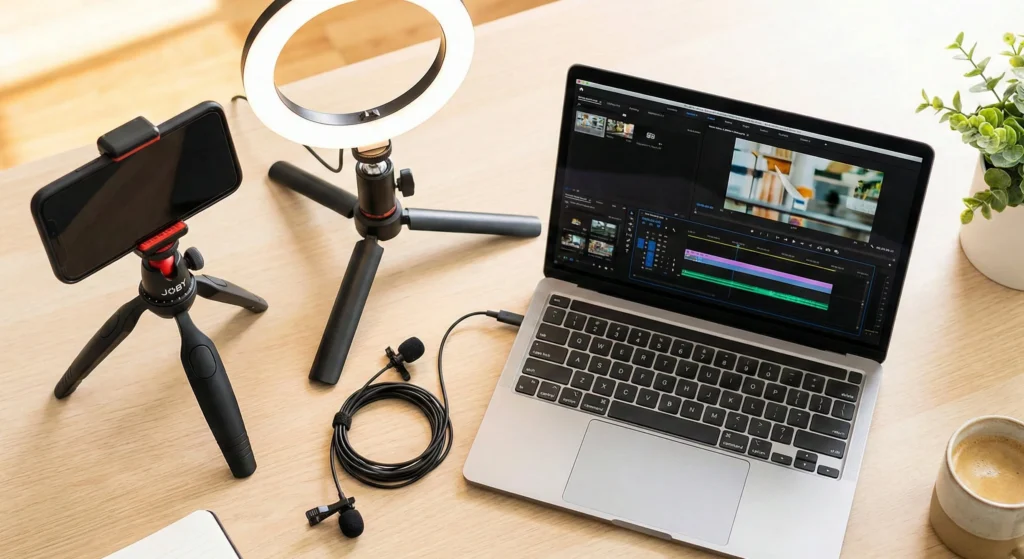
How do you get YouTube videos cited by AI? Best practices for video AEO
AI engines never watch your videos. They read them: the title, the description, the transcript, the chapters. That single fact decides which videos get cited in AI answers, and it explains why a 200-view video with clean metadata can beat a 500,000-view video without it. Here is what the evidence says actually works.
Read More
The Seven Rules of AEO
Seven rules decide whether AI cites your page: question-shaped titles, answer-first sections, standalone chunks, named entities, sourced numbers, nothing gated.
Read MoreAbout this research
Both the research and this article were produced in collaboration with AI, and I think that is worth saying plainly. AI helped me analyze a dataset of thousands of answers and tens of thousands of cited links, and helped me draft this piece. That collaboration is the only practical way one person does work at this scale. The judgment calls, the verification of every figure against the underlying data, and the conclusions are mine.
Jason Vanderheyden · Director of Web Development and Product Engineering, Hahn
Published August 25, 2026 · Last updated August 25, 2026