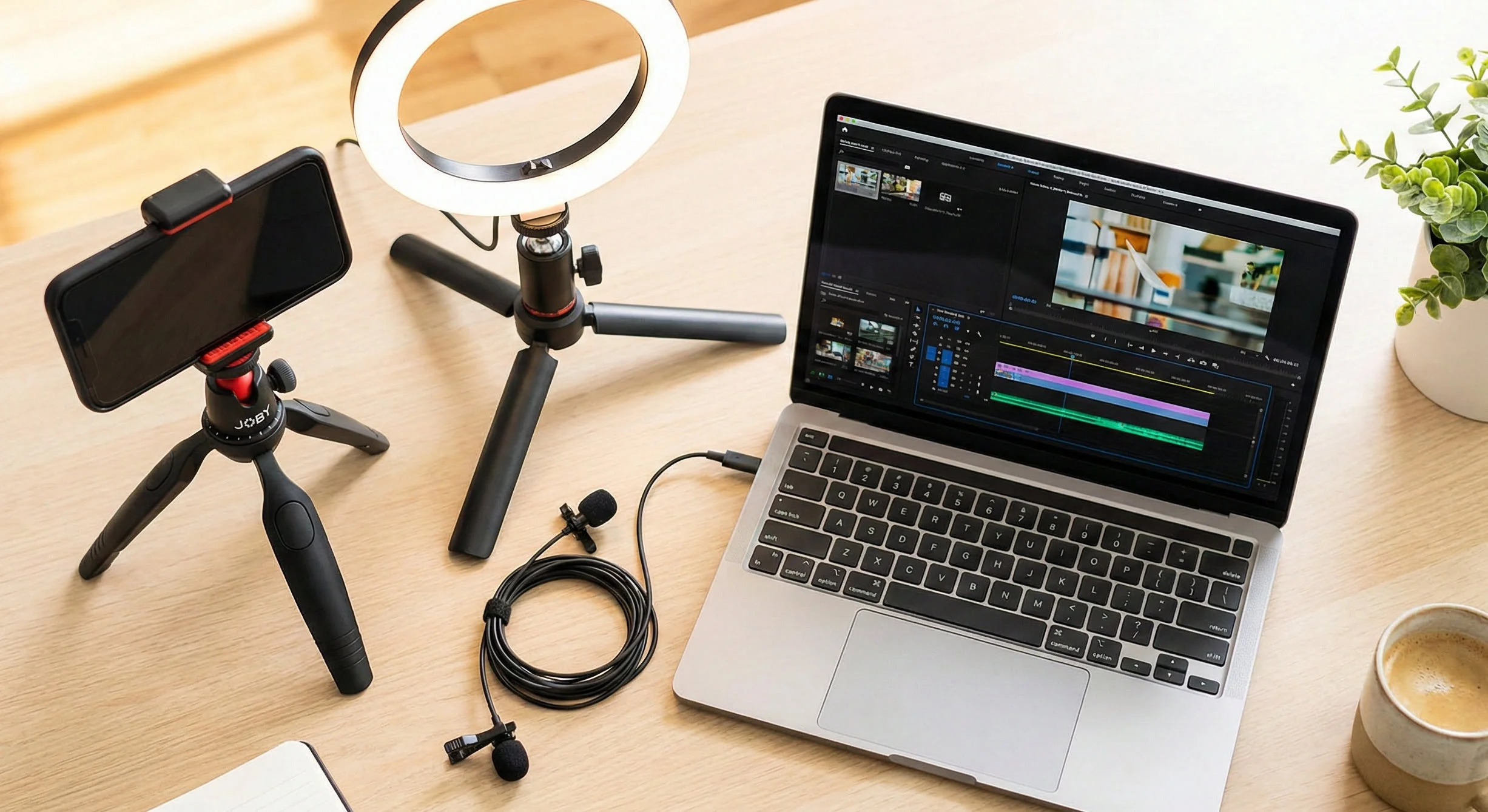
AI engines never watch your videos. They read them: the title, the description, the transcript, the chapters. That single fact decides which videos get cited in AI answers, and it explains why a 200-view video with clean metadata can beat a 500,000-view video without it. Here is what the evidence says actually works.
Why does YouTube matter so much in AI answers?
YouTube is the only social platform that consistently earns AI citations. Across a study of more than 100 million citation instances, YouTube took roughly 31.8% of all social citations in AI search, second only to Reddit. Moz’s analysis of nearly 40,000 Google AI Mode queries found YouTube is the second most cited external source in AI Mode overall. And on Google AI Overviews, the largest AI search surface by reach, a single video platform accounts for about 10.6% of all citations by itself.

In one consumer category we track through monthly prompt research, YouTube was the single most-cited domain in the entire dataset, ahead of every institutional and editorial source. For most brands this road is wide open, because video optimized for human viewers and video optimized for citation are two different things, and almost nobody is doing the second one.
What actually gets a video cited?
Text. The engine ingests your title, description, transcript, and chapter markers, scores those against the question it was asked, and cites the videos whose text answers it most cleanly. The footage itself is invisible.
We have watched this play out in our own tracking. For one consumer brand we monitor, the first video the engines ever cited was not the newest upload or the most-viewed. It was the only video on the channel with a complete description and keyword tags. Not the best video. The best-documented one. Engines cite what they can read.
Do views and subscribers matter?
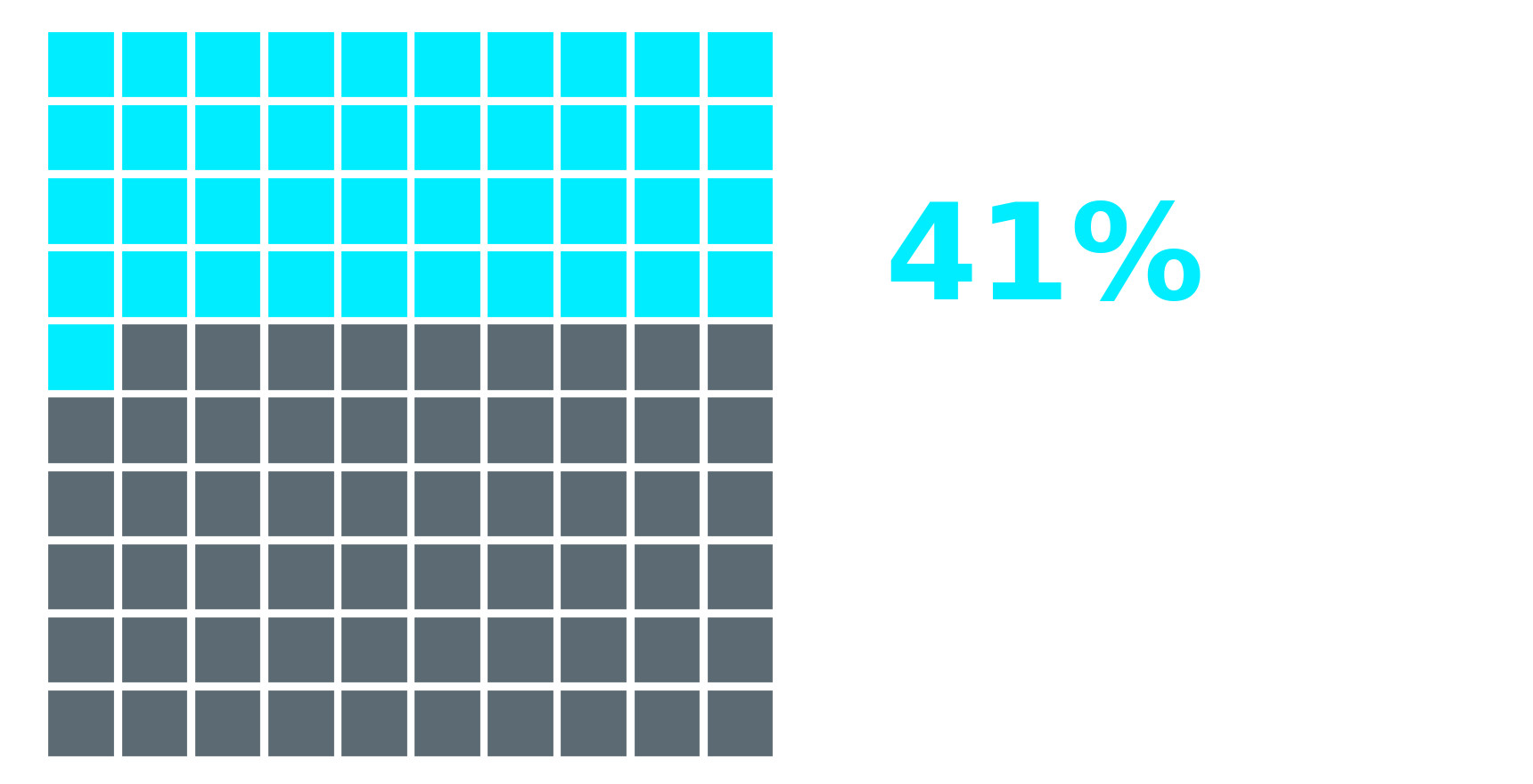
Effectively no. In the same 100-million-citation study, view count correlated with citation frequency at r = -0.03, statistically indistinguishable from zero, and about 41% of AI-cited videos had fewer than 1,000 views at the moment they were cited. Popularity buys you reach with humans. It buys you almost nothing with engines. Extractability is the currency.
Should you make Shorts or long-form?
For citations, long-form, and it is not close: roughly 94% of AI citations to YouTube go to long-form content, while Shorts take 5.7%. Shorts are a reach play, and reach is a legitimate goal. Just do not put Shorts in an AEO plan and expect them to show up in AI answers.

The seven best practices
- Give the video a question-shaped title. “How to…” and “What is…” titles match how people ask engines. “Are data centers noisy?” gets matched to the question; “Our Facility Story” gets matched to nothing.
- Say the answer out loud in the first 30 seconds. Front-load the factual claim, specifically and explicitly, before the intro music and the channel patter. The transcript’s opening carries the most extraction weight, exactly like a web page’s first paragraph.
- Upload human-corrected captions. Auto-captions are a starting point, not a deliverable. Their errors get ingested as fact, including misheard product and company names, which the engines will then repeat. YouTube’s caption tools make replacing them straightforward, and twenty minutes of transcript cleanup is worth more than a better camera.
- Add descriptive chapters. A 20-minute video with eight chapters becomes eight separately citable units instead of one undifferentiated block, and adding chapters takes minutes. Note the scope: timestamped citations appear exclusively on Google surfaces, so chapters are specifically a Google AI Overviews and AI Mode play.
- Write a real description. Two hundred to three hundred words, with the primary topic stated in the first two sentences, the people in the video named, and a link to the matching page on your site.
- Complete the metadata. Keyword tags, category, named entities. It is unglamorous and it is exactly what separated the one cited video from the rest of the channel in our tracking.
- Publish the transcript on your own domain. A companion page turns a rented YouTube asset into an owned, citable one that works on every engine, not just Google’s. This is the highest-value thirty minutes in the entire video workflow, and it is the step almost every team skips.
What makes videos invisible to AI?
- Relying on auto-captions, so the transcript is full of ingestible errors.
- Publishing only Shorts and clips, which engines almost never cite.
- Chasing production value at the expense of clarity: a polished brand film that circles a topic loses to a plain ten-minute explainer that answers the question.
- Leaving the video only on YouTube, with no transcript or companion page on a domain you own.
What we don’t fully know
Two honest caveats. Published studies have not quantified exactly how much human-corrected captions outperform auto-captions, so treat that practice as strongly evidence-adjacent rather than measured: the mechanism is certain, the multiplier is not. And category matters: in our own tracking, video dominates citations in consumer categories while barely registering in some B2B and industrial ones, so measure your own category before betting the plan on video.
Get the full playbook
Video is one of eight channels in the AEO Field Guide, the complete playbook for getting content cited by AI: seven universal rules, a 60-second pre-publish checklist for every channel, and the research behind all of it. Free.
Frequently asked questions
No. Engines read a video's text layer: title, description, transcript, captions, and chapters. The visual content is not analyzed for citation purposes, which is why a video's documentation matters more than its production values.
Rarely. Roughly 94% of AI citations to YouTube go to long-form content; Shorts take about 5.7%. Shorts earn human attention, not machine citations, and both goals are legitimate as long as you do not confuse them.
Effectively no. Across more than 100 million analyzed citations, view count correlated with citation frequency at r = -0.03, and about 41% of AI-cited videos had under 1,000 views when cited.
More About AEO
How do AI engines choose what to cite? We tracked 2,429 answers to find out
AI engines do not cite the biggest brand, the highest domain authority, or the most popular page. They cite whoever published the clearest answer to the question being asked, and most of the time, nobody credible has. We know because we spent three months logging where four AI systems get their answers about one contentious industry: 2,429 answers, roughly 19,100 cited links.
Read More
The Seven Rules of AEO
Seven rules decide whether AI cites your page: question-shaped titles, answer-first sections, standalone chunks, named entities, sourced numbers, nothing gated.
Read MoreAbout this research
Long-form share, view-count correlation, social-citation split, and timestamp findings: OtterlyAI YouTube AI Citation Study, March 2026, 100M+ citation instances. AI Mode citation ranking: Moz, analysis of nearly 40,000 queries, February 2026. AI Overviews source distribution: BrightEdge, April 2026. Category-level findings come from Hahn’s monthly prompt research, more than 9,000 logged AI answers and 150,000 citation records across multiple industries and clients; client examples are anonymized.
Both the research and this article were produced in collaboration with AI, and I think that is worth saying plainly. AI helped me analyze a dataset of thousands of answers and tens of thousands of cited links, and helped me draft this piece. That collaboration is the only practical way one person does work at this scale. The judgment calls, the verification of every figure against the underlying data, and the conclusions are mine.